Quick Answer: Solo entrepreneurs scale their business while protecting their time and energy by shifting from time-for-money models toward systems, digital products, templates, and AI-assisted workflows that generate revenue without requiring proportionally more of their personal hours. The four pillars of sustainable scaling for solopreneurs are: income stream diversification (adding passive digital products), workflow automation and templating, strategic time protection (ruthless prioritization), and capacity-aware goal setting. This guide covers every pillar with practical steps you can implement immediately.
The conventional advice for growing a business is to work harder, do more, launch more, post more, and hustle more. For a solo entrepreneur with finite time and energy, that advice is a direct path to burnout — not sustainable growth. This guide takes a different approach: scaling smarter by designing your business to grow without consuming more of your time.
Why Traditional Scaling Advice Fails Solo Entrepreneurs
Traditional business scaling advice is written for companies with teams. "Hire a marketing manager." "Bring on a VA." "Outsource fulfillment." These are legitimate strategies — but they require capital, management time, and operational infrastructure that most solopreneurs are not yet positioned for.
For a solo entrepreneur — whether you sell handmade jewelry, digital downloads, printable planners, AI prompt workbooks, or Amazon KDP books — the scaling equation is fundamentally different:
- You cannot clone yourself
- Every hour you spend on one task is an hour not spent on another
- Your energy, creativity, and focus are finite daily resources — not scalable inputs
- Growth that requires proportionally more of your time is not sustainable scaling — it is just more work
Key Principle: Sustainable scaling for a solo entrepreneur means increasing revenue per hour of your time — not increasing total hours worked. Every scaling strategy in this guide is evaluated against that standard.
The 4 Pillars of Scaling While Protecting Your Time and Energy
Pillar 1 — Passive and Semi-Passive Income Streams
The most powerful time-protection strategy available to a solo entrepreneur is adding income streams that do not require your active presence for every sale. Digital products are the most accessible and highest-leverage passive income category for small business owners.
A digital product — a printable planner, a business workbook, an AI prompt pack, a Canva template, a coloring book — is created once and sold an unlimited number of times with no additional production time, no shipping, no inventory, and no per-sale labor. Every digital sale that happens while you sleep, while you are making handmade jewelry, or while you are spending time with family is revenue that did not cost you an additional hour.
For handmade sellers and physical product business owners, adding a digital product line alongside your physical products is one of the highest-ROI scaling moves available. You leverage the audience and platform you have already built to generate a second revenue stream with fundamentally different economics.
Shopnesie carries a full catalog of digital products for small business owners that exemplify exactly this model:
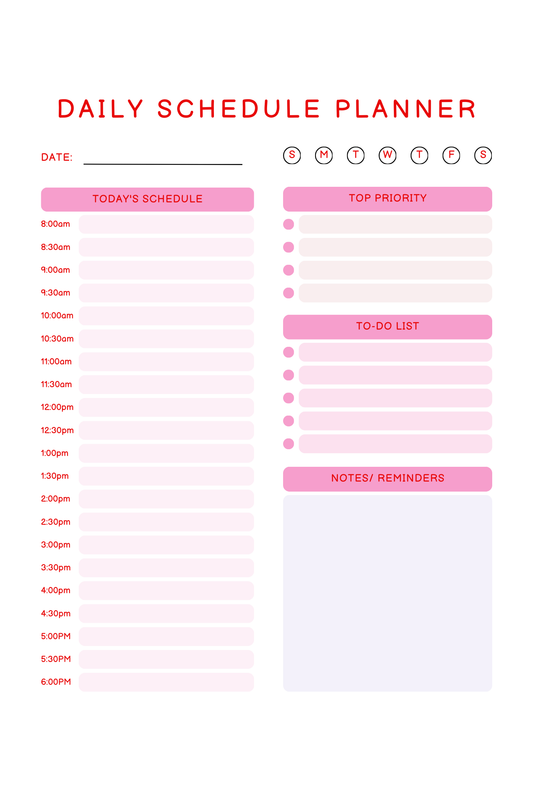
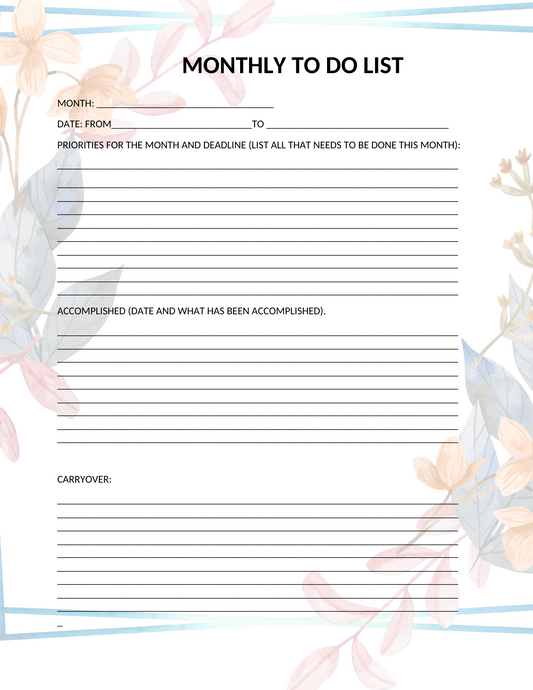
- Printable Planners and Journals — instant-download planning tools that generate passive revenue
- AI Prompt Workbooks — curated prompt packs and business workbooks for digital product income
- Creator Business Workbooks — structured business planning workbooks sold as digital downloads
- Canva Templates — fully editable design templates generating passive income per download
Pillar 2 — Workflow Automation and Templating
Every repetitive task you perform from scratch is a scaling bottleneck. When you write every product description, every social media caption, every email newsletter, and every listing title starting from a blank page, you are capping your output at the speed of your manual creation process.
Workflow automation and templating replace blank-page creation with structured, repeatable systems:
- Product description templates: A structured template for your most common product types means you fill in variables rather than write from scratch — cutting listing creation time by 60–80%
- Social media caption templates: Rotating caption frameworks for your core content themes eliminate the "what do I write?" friction that kills content consistency
- Email newsletter templates: A standard layout for announcements, promotions, and newsletters that you update rather than rebuild each time
- AI prompt workflows: Curated AI prompts for your highest-frequency business writing tasks — product descriptions, content captions, blog outlines, email subject lines — that turn 30-minute writing sessions into 5-minute prompt-and-refine workflows
The AI Prompt Workbooks at Shopnesie are designed specifically to help solopreneurs build AI-assisted writing workflows for every major business content task — dramatically reducing the time and cognitive energy required to produce product listings, marketing content, and business planning materials. The Canva Templates at Shopnesie do the same for your visual content — replace design-from-scratch with template-and-customize.
Pillar 3 — Strategic Time Protection
Scaling while protecting your energy requires treating your time as the finite, irreplaceable resource it is — and making deliberate decisions about what gets access to it. Strategic time protection is not about doing less. It is about doing only what moves the needle and building systems to handle everything else.
The three most powerful time protection practices for scaling solopreneurs are:
The 80/20 Audit
In most solo businesses, roughly 20% of your activities generate 80% of your results. Conduct a quarterly 80/20 audit: review your last 90 days and identify which products, platforms, content types, and activities generated the most revenue and growth. Then protect time for those activities and ruthlessly reduce or eliminate the rest.
Use a Creator Business Workbook from Shopnesie to conduct this audit in a structured format — the quarterly review worksheets are designed to help solopreneurs identify their highest-leverage activities and cut the low-ROI work.
Hard Time Boundaries
Scaling businesses have a way of expanding to fill every available hour unless you set hard limits. Define your working hours and protect them — both from overwork (no business after your end time) and from low-value tasks (no checking stats during your deep work block). Write your time boundaries in your planner and treat them as client commitments.
The "Only I Can Do This" Filter
Before adding any task to your workload, ask: "Is this something only I can do?" Tasks that require your unique creative skill, your personal brand voice, or your specific expertise belong in your schedule. Tasks that can be templatized, automated with AI, or deferred belong in a system — not in your personal work hours.
Pillar 4 — Capacity-Aware Goal Setting
One of the most common reasons solopreneurs fail to scale sustainably is goal setting that ignores capacity. Setting a goal to launch 10 new products, grow to 5,000 email subscribers, and double revenue in a single quarter without accounting for the actual hours each goal requires is not ambitious planning — it is a burnout schedule disguised as a growth plan.
Capacity-aware goal setting works in three steps:
- Estimate the real time cost of each goal before committing to it. How many hours will launching 10 products actually take? How many hours does doubling your email list require? Be honest.
- Compare that total to your available work hours for the quarter — after subtracting existing commitments, rest time, and buffer for the unexpected.
- Prioritize ruthlessly. Choose the goals whose time cost fits within your available capacity and defer the rest to the following quarter. A goal deferred is not a goal abandoned — it is a goal protected from being crushed under an overloaded schedule.
The Creator Business Workbooks at Shopnesie include quarterly planning worksheets that walk solopreneurs through this capacity-aware goal-setting process — with space to map time estimates alongside goal commitments before the quarter begins.
Practical Scaling Strategies for Solo Entrepreneurs by Business Type
Scaling Strategy for Handmade Product Sellers and Etsy Sellers
Handmade businesses face the hardest scaling ceiling because production time is physically limited — there are only so many hours in a day to make jewelry, fabric accessories, candles, or ceramics. The most effective scaling strategies for handmade sellers work around this ceiling rather than trying to push through it.
Strategy 1 — Add digital products alongside physical products. Your handmade brand has an audience that trusts you. Add digital products — care guides, style guides, printable gift tags, product photography tips for buyers, or business planning tools — that generate revenue without production time. Every digital sale supplements your physical product income without adding to your workload.
Strategy 2 — Create product lines instead of one-off pieces. Designing a coordinating collection of 8–12 pieces from the same materials and techniques is more time-efficient than making 8 completely different products. Systems within your production process reduce the per-unit time cost as your catalog grows.
Strategy 3 — Raise prices strategically. For handmade sellers, one of the most time-protective scaling moves is to price your work for its real value. Doubling revenue through 20% price increases on existing products requires zero additional production hours — unlike doubling revenue by doubling output.
For digital product tools that complement a handmade business, explore the Printable Planners and Journals and Canva Templates at Shopnesie as ready-made digital product additions.
Scaling Strategy for Digital Product Sellers
Digital product businesses have the best native scaling economics of any solo business model — once a product is created, it costs nothing additional to sell the hundredth copy. The scaling challenge for digital product sellers is not production capacity but catalog depth, discoverability, and traffic.
Strategy 1 — Build product families, not isolated products. A single AI prompt workbook is a product. A collection of 10 AI prompt workbooks targeting a specific niche is a catalog that earns more per visitor, supports bundle pricing, and generates significantly more search visibility across platforms.
Strategy 2 — Use AI tools to accelerate product development. AI prompt workflows can cut the time to create a new digital product by 50–70% — from initial outline through to final content — allowing you to expand your catalog without proportionally expanding your working hours. The AI Prompt Workbooks at Shopnesie are specifically designed to support this kind of AI-assisted digital product development workflow.
Strategy 3 — Publish across multiple platforms. The same digital product — a printable planner, a business workbook, a coloring book prompt pack — can be listed on Shopify, Etsy, Amazon KDP, and Teachers Pay Teachers simultaneously. Multi-platform publishing multiplies revenue from a single creation without additional production time.
Scaling Strategy for Content-Based and Education Businesses
Solopreneurs who build revenue through content — blog posts, social media, educational resources, Facebook wellness pages, or tutorial series — scale by systematizing content creation and monetizing their audience more efficiently rather than simply creating more content.
Strategy 1 — Repurpose every piece of content across platforms. One blog post becomes a Pinterest graphic, three Instagram captions, a Facebook post, and an email newsletter section. The content is created once and distributed many times — each distribution requiring minimal additional time.
Strategy 2 — Build an evergreen content library. Content that remains relevant and drives traffic for months or years after publication has a fundamentally better time ROI than trending content that spikes and disappears. Resource hub articles, how-to guides, and educational posts are the highest-leverage content investments for solo content creators.
Strategy 3 — Monetize your audience with digital products. An engaged audience — whether on Facebook, Instagram, Pinterest, or your email list — is the most valuable asset in your business. The most time-efficient way to monetize that audience without adding service work or physical product fulfillment is through digital products: workbooks, printable tools, prompt packs, and templates they can buy and use immediately. See the full Shopnesie digital products catalog for examples of high-converting digital products built for exactly this monetization strategy.
The Time-Energy Audit: Finding Your Scaling Leverage Points
Before adding any new scaling strategy, conduct a Time-Energy Audit to identify where your hours are actually going and which activities are generating the most return. This audit takes 30–45 minutes and produces clarity that most solopreneurs have never had about their own business.
How to Conduct Your Time-Energy Audit
Step 1 — List every recurring task in your business. Write down everything you do in a typical week: product creation, photography, listing writing, social media posting, email, customer service, admin, packaging, shipping, planning, content creation, market research, and anything else you regularly do.
Step 2 — Estimate the weekly hours for each task. Be honest. Most solopreneurs significantly underestimate how much time admin, email, and social media consume compared to their perception.
Step 3 — Rate each task on two scales. Revenue impact (1–5: how directly does this task drive revenue?) and Energy cost (1–5: how draining is this task relative to others?). Tasks with low revenue impact and high energy cost are your highest-priority candidates for elimination, automation, or templating.
Step 4 — Identify your three highest-leverage activities. Which three tasks, if done consistently and well, would produce the most revenue and growth? These are your protected activities — the ones that get your best hours and your most focused energy.
Step 5 — Build a plan to reduce or automate everything else. For every low-leverage, high-energy task: Can it be templated? Can it be done with AI assistance? Can it be batched to reduce context-switching? Can it be eliminated entirely without meaningful consequence?
Conduct this audit quarterly using a structured business workbook. The Creator Business Workbooks at Shopnesie include quarterly review and business audit worksheets designed for exactly this kind of strategic evaluation.
Tools That Enable Scaling Without Consuming More of Your Time
The right tools are the infrastructure of sustainable scaling. These are the tools that consistently produce the highest return on time for solo entrepreneurs growing their business:
1. Printable Business Planners and Goal Trackers
A structured business planner is the operational backbone of a scaling solopreneur. Without a planner, growth decisions get made reactively. With a planner, you are making intentional, capacity-aware decisions every week about where your time goes — the foundation of scaling without overloading yourself.
Browse the Printable Planners and Journals at Shopnesie for weekly business planner layouts, quarterly goal trackers, and habit tracker pages — all available as instant digital downloads.
2. Creator Business Workbooks for Strategic Planning
Scaling requires strategic decisions — which products to develop, which platforms to prioritize, which revenue streams to build. A structured business workbook provides the frameworks and guided prompts to make those decisions clearly and confidently, rather than by intuition alone.
The Creator Business Workbooks at Shopnesie cover business planning, goal setting, customer research, product strategy, and marketing planning — the core strategic work of scaling a solo business done in a structured, manageable format.
3. AI Prompt Workbooks for Leveraged Content and Product Creation
AI tools are the most powerful scaling accelerator available to solo entrepreneurs today — but only when used with structured, purpose-built prompts rather than open-ended experimentation. AI prompt workbooks provide the tested prompt sets that turn AI tools from interesting novelties into genuine workflow multipliers.
The AI Prompt Workbooks at Shopnesie cover product description writing, social media content, email marketing, business planning, coloring book prompt creation, teacher resource development, and more — giving solopreneurs the AI workflow infrastructure to scale content and product creation without proportionally more time.
4. Canva Templates for Scalable Visual Content
Visual content — product photos, social media graphics, Pinterest pins, email headers, marketing materials — is a constant scaling bottleneck for solo entrepreneurs who do not have a design background. Canva templates solve this by replacing design-from-scratch with template-and-customize, turning a 45-minute design session into a 5-minute content-creation task.
The Canva Templates at Shopnesie include professionally designed, fully editable templates for social media, product marketing, business branding, and more — the visual content infrastructure that enables scaling without a design team.
Frequently Asked Questions: Scaling While Protecting Your Time and Energy
How do solo entrepreneurs scale their business without working more hours?
Solo entrepreneurs scale without working more hours by shifting from time-for-money activities toward systems and income streams that generate revenue independent of their active hours. The four primary strategies are: adding passive digital products (printables, workbooks, templates, AI prompt packs) that sell without per-sale labor; building AI-assisted and templated workflows that produce more output per working hour; conducting regular 80/20 audits to identify and protect their highest-leverage activities; and setting capacity-aware goals that fit within their actual available hours rather than their ambitions alone. The goal is to increase revenue per hour — not total hours worked.
What are the best passive income strategies for a solopreneur or small business owner?
The most accessible and effective passive income strategies for solopreneurs are: selling digital products (printable planners, business workbooks, AI prompt packs, Canva templates, coloring book prompts) on platforms like Shopify, Etsy, and Amazon KDP; publishing low-content and no-content books on Amazon KDP; creating educational content and resources that sell through evergreen organic traffic; and licensing or bundling existing digital content into new product formats. Digital products have the best passive income economics for solo entrepreneurs because they are created once and sold an unlimited number of times with no additional production, shipping, or inventory costs.
How does adding digital products help a handmade business owner scale?
Adding digital products helps a handmade business owner scale by creating a second revenue stream with fundamentally different economics than physical production. Handmade products have a hard production ceiling — there are only so many hours available to make physical items. Digital products — printable care guides, style lookbooks, business planning workbooks, Canva templates, or AI prompt packs — are created once and generate revenue without any additional production time per sale. A handmade seller who adds even one or two digital product lines can meaningfully increase total revenue without increasing working hours, and can continue earning during periods when physical production is limited.
What is an 80/20 audit for a small business owner, and how does it help with scaling?
An 80/20 audit for a small business owner is a quarterly review process where you identify which 20% of your activities, products, and platforms are generating approximately 80% of your revenue and growth — and which 80% of your activities are producing minimal return. Once identified, you protect and invest more time in your highest-leverage activities and reduce, automate, or eliminate low-ROI tasks. For solopreneurs, the 80/20 audit is one of the most powerful tools for freeing up time for scaling activities without adding working hours. A structured business workbook with quarterly review worksheets makes this audit systematic rather than guesswork.
How can AI tools help a solopreneur scale their business?
AI tools help solopreneurs scale by dramatically reducing the time required for high-frequency business writing tasks — product descriptions, social media captions, email newsletters, blog content, listing titles, and business planning documents. When used with structured, purpose-built AI prompt sets, these tools can reduce a 30-minute writing task to a 5-minute prompt-and-refine workflow, effectively multiplying creative output per working hour. AI Prompt Workbooks — like those available at Shopnesie — provide the curated, tested prompt libraries that turn AI tools from experimental to systematically useful for scaling solopreneur businesses.
What is capacity-aware goal setting for a solopreneur?
Capacity-aware goal setting is the practice of estimating the real time cost of each business goal before committing to it, comparing that total to your actual available working hours for the period, and choosing only the goals that fit within your genuine capacity. It is the opposite of aspirational goal setting — which sets goals based on ambition alone without accounting for the hours required to achieve them. For solopreneurs, capacity-aware goal setting prevents the overloaded quarters that cause burnout and under-delivery, and ensures that the goals you commit to are ones you can actually accomplish with the time and energy you have available.
How do Canva templates help a small business owner scale their content creation?
Canva templates help small business owners scale content creation by replacing design-from-scratch with a template-and-customize workflow that takes a fraction of the original time. Instead of building a social media graphic, product image, or marketing material from a blank canvas — which can take 30–60 minutes — a pre-designed branded template requires only text and image swaps, reducing content creation time to 5–10 minutes per piece. This time reduction makes daily or multi-daily content posting habits feasible for solo entrepreneurs who cannot afford to spend hours on design. Canva Templates for small business owners are available as instant digital downloads at Shopnesie.
Summary: How to Scale Your Business While Protecting Your Time and Energy
- Sustainable scaling for solopreneurs means increasing revenue per hour — not increasing total hours worked
- The 4 pillars of time-protective scaling: passive income streams, workflow automation, strategic time protection, and capacity-aware goal setting
- Add digital products alongside physical products to create revenue that does not require per-sale production time
- Build AI-assisted and templated workflows for your highest-frequency business writing tasks
- Conduct quarterly 80/20 audits to identify and protect your highest-leverage activities
- Use the "Only I Can Do This" filter before adding any new task to your personal workload
- Set capacity-aware goals — estimate the real-time cost of each goal before committing to it
- Repurpose content across platforms to multiply reach without multiplying creation time
- Use a business planner every week to make intentional, capacity-aware decisions about where your time goes
- Scale your catalog, not just your hours — a larger digital product catalog earns more passively over time
Start scaling smarter with the right tools from Shopnesie:
- Printable Planners and Journals at Shopnesie — weekly planner layouts, goal trackers, and habit tracker pages for intentional, capacity-aware business management — instant download
- Creator Business Workbooks at Shopnesie — structured workbooks for 80/20 audits, capacity-aware goal setting, quarterly planning, and business strategy for solopreneurs
- AI Prompt Workbooks at Shopnesie — build AI-assisted workflows that multiply your content and product creation output per working hour
- Canva Templates at Shopnesie — replace design-from-scratch with template-and-customize to scale your visual content without a design team
- Shopnesie.com — browse the full catalog of digital products, planners, workbooks, and templates for scaling solopreneurs
All planners, workbooks, templates, and AI prompt packs at Shopnesie are available as instant digital downloads — purchase once, download immediately, and start scaling smarter today.
About the Author
Nesie Njamnsi is a Small Business Organization Coach and Digital Product Creator. She helps Etsy sellers, handmade product business owners, service providers, coaches, freelancers, and creative/KDP authors build simple, sustainable systems using planners, templates, and blueprints so they can scale without burnout.
With years of hands-on experience running her own successful digital product business, Nesie specializes in practical time management, client onboarding systems, and productivity frameworks designed specifically for solopreneurs.